
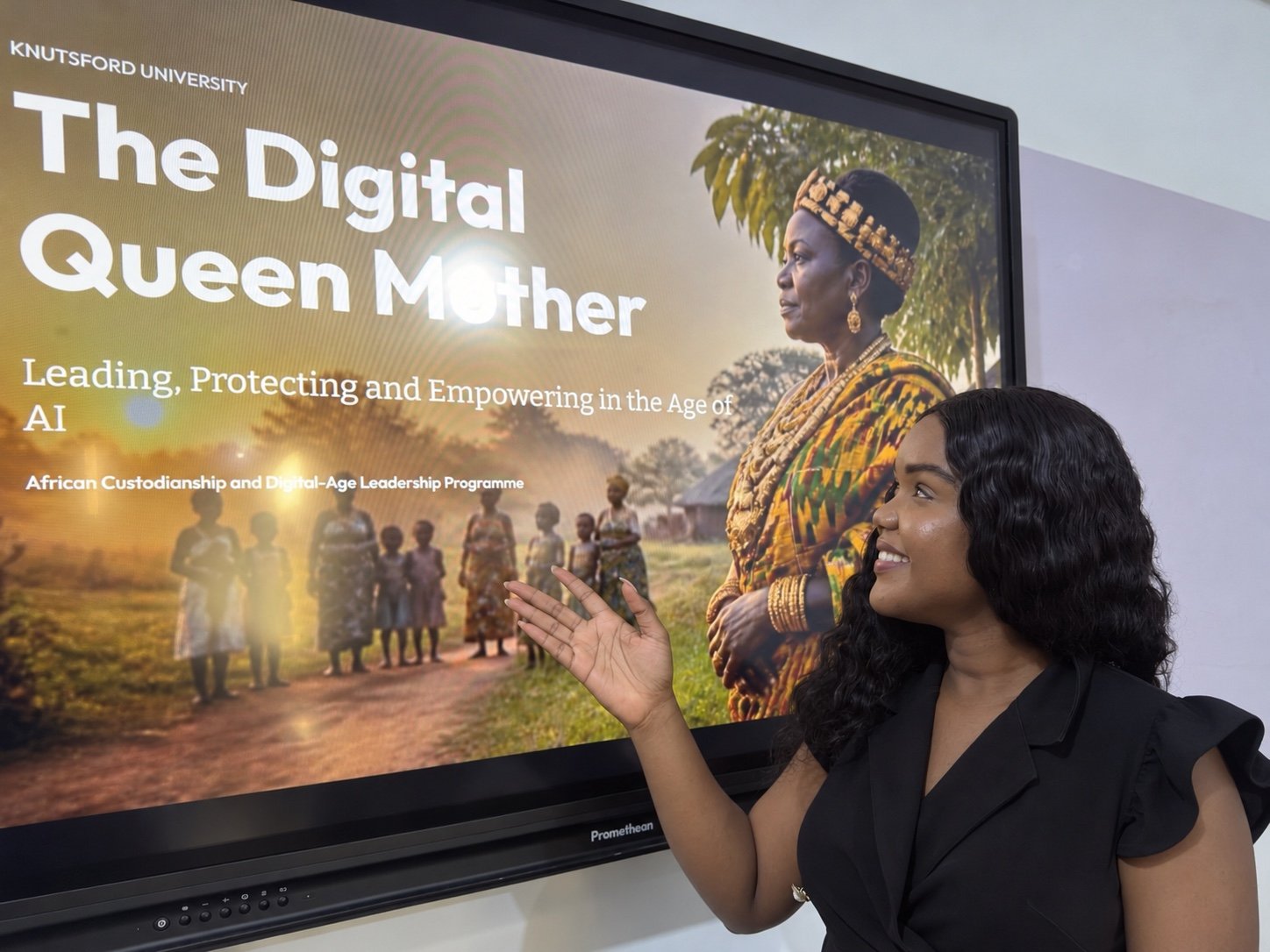
Can a queen mother use AI to help keep 100 girls in school?
We put it to the test, live, at Knutsford University's African Custodianship and Digital Age Leadership Programme in Accra.
We started with a real problem, one queen mothers know far better than any app: girls who should be in the classroom slipping out of it.
The exercise was built on what they bring to their communities every day: knowledge of the families, the pressures and the people who can help. AI's job was only to turn that into a first draft.
Within minutes, it had produced a project outline, a set of activities, a draft budget in Ghana cedis and a letter inviting local businesses to sponsor the effort.
The insight belongs to the women in the room. AI simply helped put it on paper.
And that could mean a lot for them.
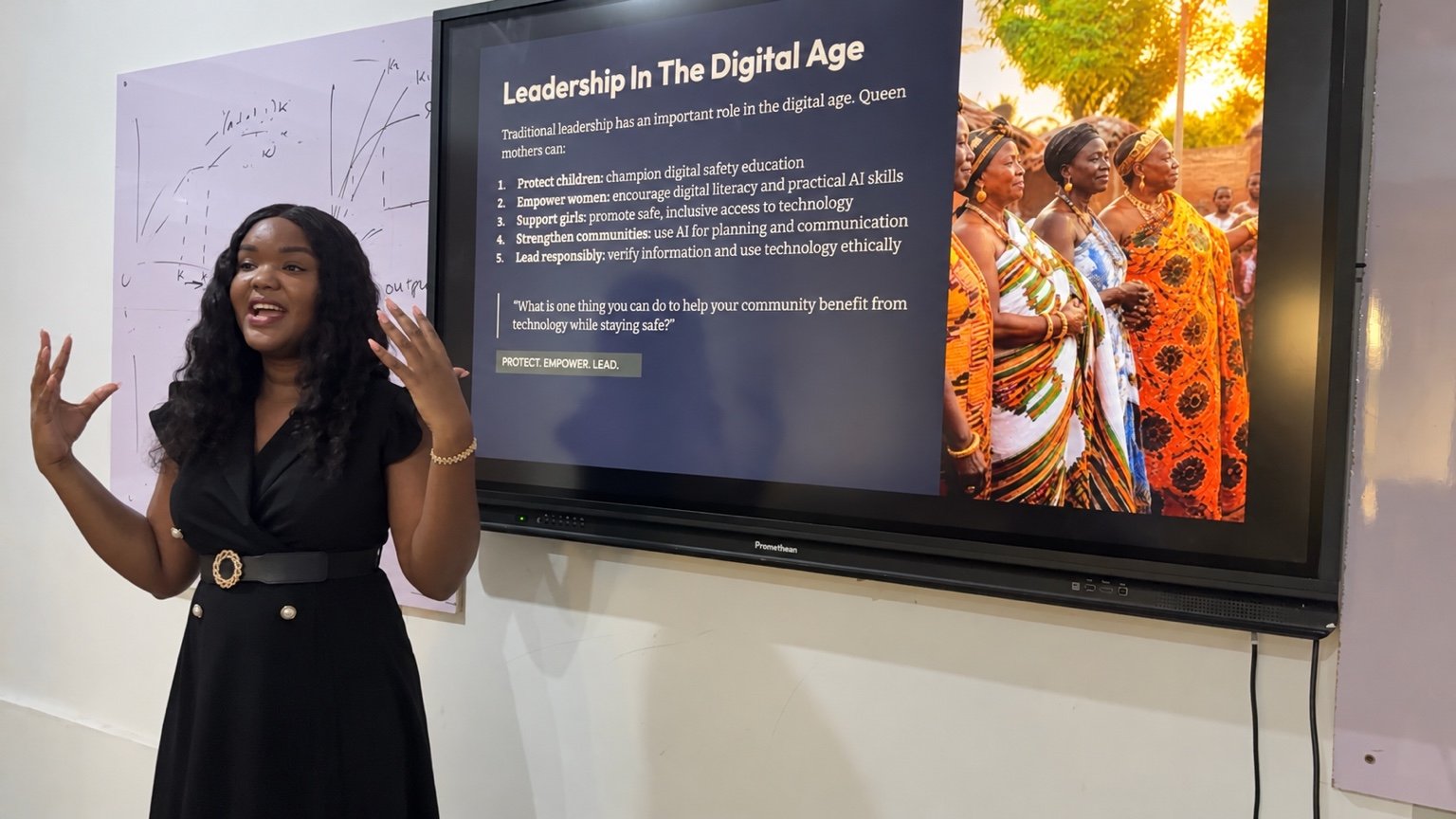
If you're not from Ghana, here's who we're talking about. In communities across Ghana, the queen mother is a traditional leader who serves alongside the chief. In many traditions, she plays a central role in choosing a new chief, and she is widely seen as a voice for women and children.
She carries a great deal. She speaks up for girls' education. She stands behind women trying to grow their businesses. She watches over children and takes families' worries to the people who can do something about them. Most of the time, she does all of this without an office, an assistant or a budget for consultants.
AI will not do that work for her. Nobody can. But it can give her something leaders like her have rarely had: help with the paperwork of leadership.
The layer we keep skipping
I have spent years delivering programmes with schools, government and international partners, including research on how AI supported learning is landing in Ghanaian classrooms. One pattern keeps showing up.
Between every new technology and the people it is meant to serve, there is a layer of trusted people. Chiefs and queen mothers. Pastors and imams. Head teachers. Market queens. Community health workers.
I call it the custodian layer.
These are the people others look to when they are deciding whether something new is safe, useful or meant for them. When technology earns their trust, it tends to travel. When it ignores them, it often stalls, no matter how good the product is.
In most conversations about AI, this layer is invisible. That afternoon reminded me how much it matters.
When the keyboard disappears
Towards the end of the session, we put the slides away and took out our phones.
Nobody needed to type. Nananom, as traditional leaders are respectfully addressed, tapped the voice button and spoke to AI the way you would speak to an assistant, asking their own questions in their own words.
For years, being included in technology has meant learning someone else's screens, menus and passwords. Voice quietly removes much of that. What remains is a quieter question, one no tutorial can answer. Is this meant for someone like me? Can I trust it?
People rarely answer that question alone. They ask someone they respect. Often, that someone sits in the custodian layer.
Her judgement matters more now
Back to the 100 girls. The plan AI drafted was only as good as the knowledge the queen mothers brought to it, and it was still only a start.
Are those prices right for her area? Will those activities work for these girls and their families? Is that business the right one to approach, or is there a better door to knock on?
AI cannot answer those questions. She can.
AI can speed up a draft. It cannot take responsibility for the choices behind it. As first drafts become almost free, the people who know their communities deeply become the people best placed to turn them into something real.
We also spent time with Adjoa, a fictional 12 year old girl. For her, AI could explain fractions using examples from the market, help her practise reading or spark stories of her own. Her world is opening up.
It is also getting trickier. A voice on the phone can sound exactly like her aunt. A video can show a friend saying something she never said. The old advice to be careful of strangers assumed a stranger looked like one.
So we talked about five habits: think, protect, check, speak up and get help. Every one of them depends on Adjoa having an adult she trusts enough to tell when something feels wrong. That, too, is the custodian layer at work.
Who teaches AI about us?
There is one more reason queen mothers belong in this conversation, and it is the one I keep coming back to.
AI learns mostly from what has been written down and put online. So much of what holds our communities together never was. The stories told at night. The proverbs that settle an argument. The customs, the histories, the quiet wisdom passed from grandmothers to grandchildren.
The programme I spoke at had custodianship in its name, and I kept thinking about that word. Queen mothers have always been custodians of this knowledge. If it is not shared on our own terms, the picture AI paints of our communities will be drawn mostly by other hands.
How we change that
The good news is that this is practical, and much of it is possible today.
Record what lives in memory, with consent. Stories, proverbs and local histories can be gathered from elders and queen mothers through recorded conversations, then transcribed and shared in Twi, Ga, English and other languages. Communities should decide what is shared, how it is credited and what stays private.
Put it where the world can find it. Knowledge kept in a drawer or a WhatsApp group stays invisible. I saw how this can change on Wikidata for Education, where educators and volunteers in Ghana and Uruguay created 224 new articles that were viewed 3.35 million times. Communities like Masakhane are doing similar work for African languages in AI. Local knowledge travels when it is placed well.
Give custodians a seat at the testing table. Anyone building AI or edtech for Ghana can invite traditional leaders to test their product and ask it about local customs, values and language. Where it gets things wrong, they will know at once. Few product teams get feedback that valuable, and it rarely costs much.
Train custodians as champions, not only users. When queen mothers understand AI well enough to guide others, they shape how it enters their communities, and how their communities enter it.
None of this needs a billion dollar lab. It needs time, trust and a willingness to listen to people who have rarely been asked.
I left that session hopeful.
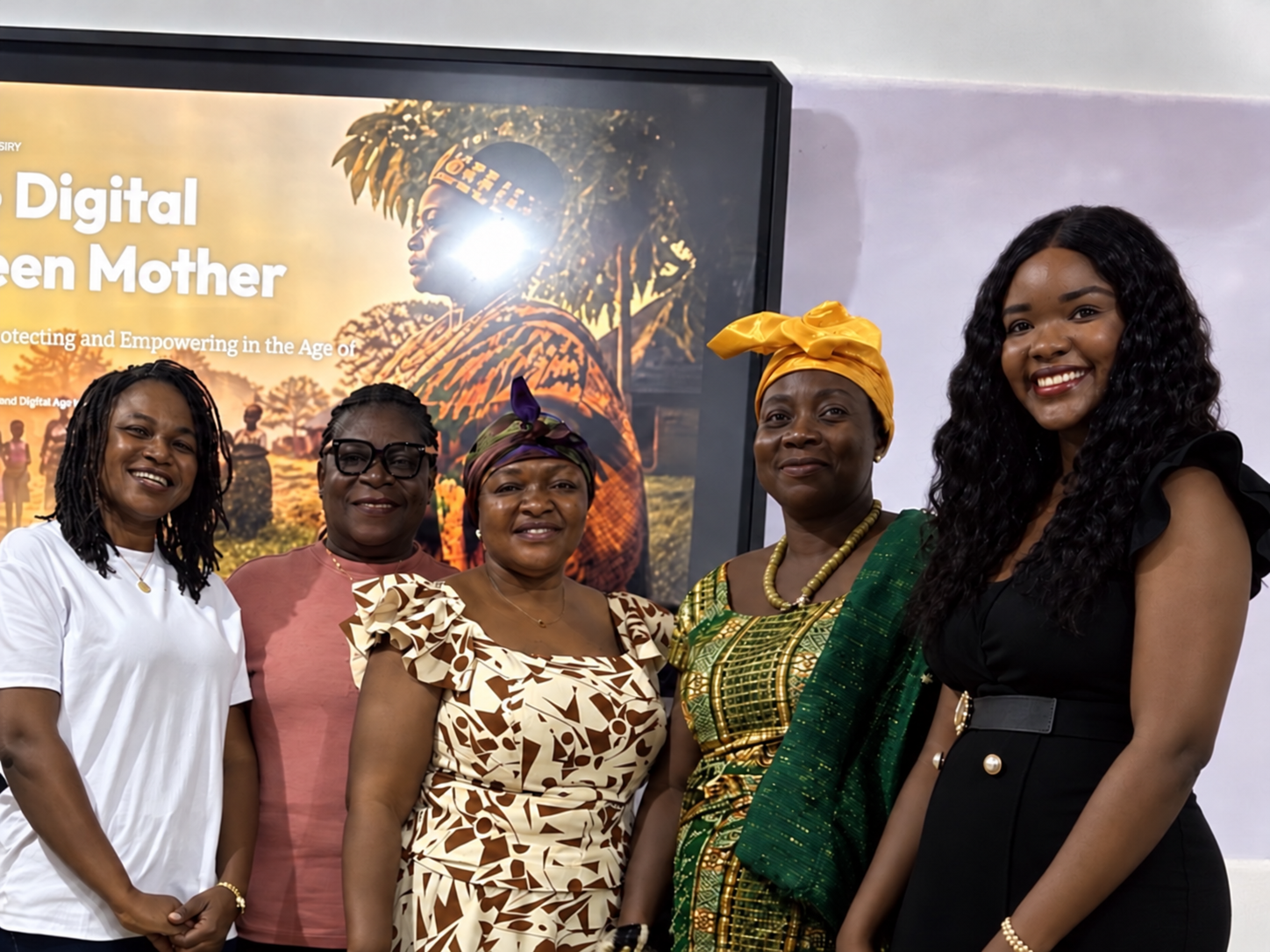
Queen mothers do not only need to learn AI. AI needs to learn from them.
This is the first piece in Talking Drums & Data, a series on culture, education and technology in Africa: who gets heard, who benefits, and who gets to shape what comes next. Next: who reskills the market woman when AI reshapes work?
If you are building AI, education or community programmes for African communities, I would love to compare notes. You can reach me at hello@babuagroup.com.
Bibi Hammond is the Founder and Lead Consultant of Babua Group, a programme delivery and market entry consultancy in Accra, Ghana. She is also the founder of Ayola Foundation, which uses African stories, play and technology to help children learn, read and lead.